The Ultimate Dumpster Size Guide: Choosing the Right Bin for Your Project


30YD_3D_Image_S_A_Container_Service-removebg-preview

The Ultimate Dumpster Size Guide: Choosing the Right Bin for Your Project

S&A Container Service

Quick Answer Summary

Most homeowners choose a 20-yard dumpster for medium renovation and cleanout projects. Smaller 6–10 yard dumpsters work best for heavy debris or tight spaces, while 30–40 yard dumpsters handle full renovations and commercial jobs. This guide breaks down our standard sizes, what they hold, and which projects different dumpster rentals in Long Island suit best. The right size depends on debris type, weight limits, and available placement space.


Choosing a dumpster shouldn’t feel like a guessing game. Pick a bin too small and you risk delays; pick one too large and you may pay for unused space.


At S&A Container, we focus on getting it right the first time. This guide explains the standard dumpster sizes, what each holds, and which projects each is best suited for customers. It’s designed to help homeowners and contractors make the right choice before scheduling delivery. Proper sizing also ensures safe placement and transport within regulations.

Understanding Volume vs Weight

Many customers focus only on how much space debris takes up, but weight is equally important. Heavy materials like concrete, dirt, and roofing shingles can reach legal transportation weight limits long before a dumpster looks full. Choosing the right size depends on both volume and tonnage.


For a deeper explanation, see our Weight & Tonnage Guide. Understanding both factors prevents overage fees and scheduling delays.


Here’s a closer look at what each dumpster size is designed to handle.

S&A, Your Trusted Dumpster Rental Experts

Deep Dive: Which Size Do You Really Need?

Ideal for compact cleanouts and minor renovations where space is limited.

Perfect for dense materials and heavy debris.

Pro Tip: When disposing of clean concrete only, 10-yard or 15-yard dumpsters are typically the largest sizes allowed due to DOT transportation weight limits.

Great for kitchens, bathrooms, and attic cleanouts.

The safest all-around option for medium projects.

Ideal for major renovations and estate cleanouts.

Designed for major demolition and commercial projects.
Trusted Dumpster

Rental Company

Trusted Dumpster Rental company

Quick Comparison Table

Size

Dimensions (Approx.)

Capacity

Best For

6 Yard

10’ L x 7’ W x 3’ H

~2–3 loads

Compact cleanouts, tight spaces

10 Yard

12’ L x 8’ W x 3.5’ H

~3–4 loads

Heavy debris or small cleanouts

15 Yard

16’ L x 8’ W x 4’ H

~5–6 loads

Small remodels, attic cleanouts

20 Yard

22’ L x 8’ W x 4.5’ H

~8–10 loads

Medium renovations

30 Yard

22’ L x 8’ W x 6’ H

~12–15 loads

Major cleanouts/additions

40 Yard

22’ L x 8’ W x 8’ H

~16+ loads

Large construction/commercial

Size

Dimensions (Approx.)

Capacity

Best For

6 Yard

10’ L x 7’ W x 3’ H

~2–3 loads

Compact cleanouts, tight spaces

10 Yard

12’ L x 8’ W x 3.5’ H

~3–4 loads

Heavy debris or small cleanouts

15 Yard

16’ L x 8’ W x 4’ H

~5–6 loads

Small remodels, attic cleanouts

20 Yard

22’ L x 8’ W x 4.5’ H

~8–10 loads

Medium renovations

30 Yard

22’ L x 8’ W x 6’ H

~12–15 loads

Major cleanouts/additions

40 Yard

22’ L x 8’ W x 8’ H

~16+ loads

Large construction/commercial

Still Unsure Which Size is Right?

Our team helps homeowners and contractors choose the correct dumpster every day. A quick call can prevent overage fees and delays. We’re happy to recommend a size based on your exact project.

Ready to schedule your dumpster? Once you know your size, scheduling is simple. Our team can confirm your choice and arrange fast delivery anywhere.

dumpster rental mastic ny

3 Questions to Ask Before You Rent

Before choosing a dumpster size, it helps to consider a few practical factors that affect how your container will be used.

bulk factor

1. What is the “Bulk” Factor?

Five heavy sofas take up more space than a ton of loose gravel. If your items cannot be broken down, always consider sizing up to avoid running out of room.

dumpster

2. Do I have the physical space?

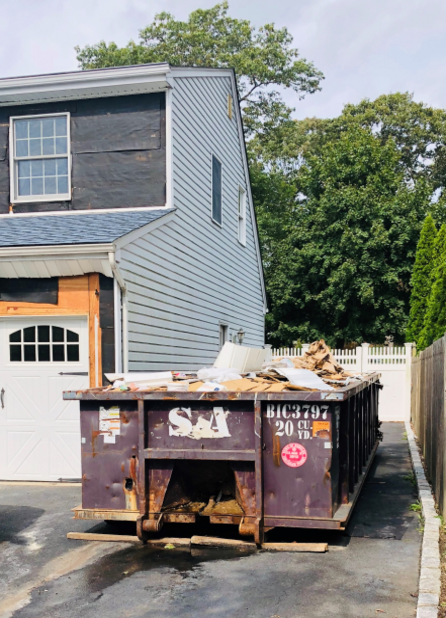
Check your driveway dimensions before scheduling delivery. A 20-yard or 30-yard dumpster is roughly 22 feet long, and the truck needs additional room to safely drop off and pick up the container.

truck

3. Is it heavy debris?

Materials like dirt, rock, asphalt, and concrete are extremely dense. To stay within safety and legal transportation limits, these often require specialized smaller containers.


For more details on weight limits, see our Weight & Tonnage Guide.

FAQ: Dumpster Size Questions

Homeowners typically prioritize driveway space and ease of loading. Contractors often focus on efficiency, debris type, and turnaround speed. For recurring contractor jobs, choosing the right size improves efficiency and reduces downtime between hauls. The right size depends on debris type, weight limits, and available placement space.

Before delivery, confirm you have adequate clearance, a flat surface, and protected pavement. Proper placement prevents delays and property damage.


For full preparation tips, see our Delivery Preparation Guide.

For most home cleanouts on Long Island, a 20-yard dumpster is the safest choice. It handles the debris from an average garage, basement, or multi-room cleanout without taking up excessive driveway space. Smaller projects may fit in a 10–15 yard container, while very large cleanouts may require a 30 yard unit.

Weight limits vary by size and debris type, but most residential dumpsters include a set tonnage allowance. Heavy materials like concrete, dirt, and roofing shingles reach weight limits quickly, even if the container is not full. Choosing the correct size helps avoid overage fees and transportation issues.

Yes, most household and construction debris can be mixed in the same container. However, extremely heavy materials or prohibited items may require separate disposal. If your project includes concrete, dirt, or hazardous materials, it’s best to confirm requirements before loading.

When placed correctly, dumpsters rarely cause driveway damage. Professional drivers use proper positioning techniques, and customers can add plywood boards for extra surface protection. Making sure the dumpster sits on a flat, stable surface reduces the risk of marks or cracks.

Dumpsters must be transported safely and legally. If debris extends above the fill line or exceeds weight limits, pickup may be delayed until the material is removed. Staying within capacity ensures safe transport and avoids additional fees.