The Ultimate Guide to Dumpster Rentals On Long Island


30YD_3D_Image_S_A_Container_Service-removebg-preview

The Ultimate Guide to Dumpster Rentals

S&A Container Service

Quick Answer Summary

Dumpster rental on The Island involves choosing the correct container size, understanding local permit rules, and planning for safe delivery and disposal. The local counties operate under different regulations and waste systems, so working with a local provider helps prevent delays, unexpected fees, and scheduling issues.


Renovating a home or managing a construction project involves unique logistical considerations. Local regulations, disposal infrastructure, and permit requirements vary across the area. Understanding how the regional system works helps projects stay on schedule and within compliance.


This guide is your primary resource for navigating the logistics of waste disposal and dumpster rentals in Long Island.

How Dumpster Rental Works on The Island

Most projects follow a consistent operational process:

Match your project to the appropriate container. See our Dumpster Size Guide for a full breakdown.

Make sure there is adequate space, overhead clearance, and a stable surface. Roll-off trucks require clear access and sufficient maneuvering space, which is important to confirm before delivery day.

Street placement may require town approval, depending on the location.

Stay below fill lines and respect transportation weight limits.

Materials are transported to regional facilities in accordance with local regulations.

dumpster rental

Understanding County Regulations

Waste handling systems differ between different counties, influencing permitting, transport logistics, and disposal routing.

  • Dumpster Rental in Nassau County: This area contains denser residential zones and stricter street placement enforcement. Debris is typically processed through regional transfer stations before leaving the county.
  • Dumpster Rental in Suffolk County: This area involves longer transport distances and includes environmental initiatives that require sorting of certain construction and demolition materials.

Because regulations vary by municipality, confirming local requirements before delivery prevents delays. Local experience helps ensure compliance with town-specific rules and disposal routing requirements.
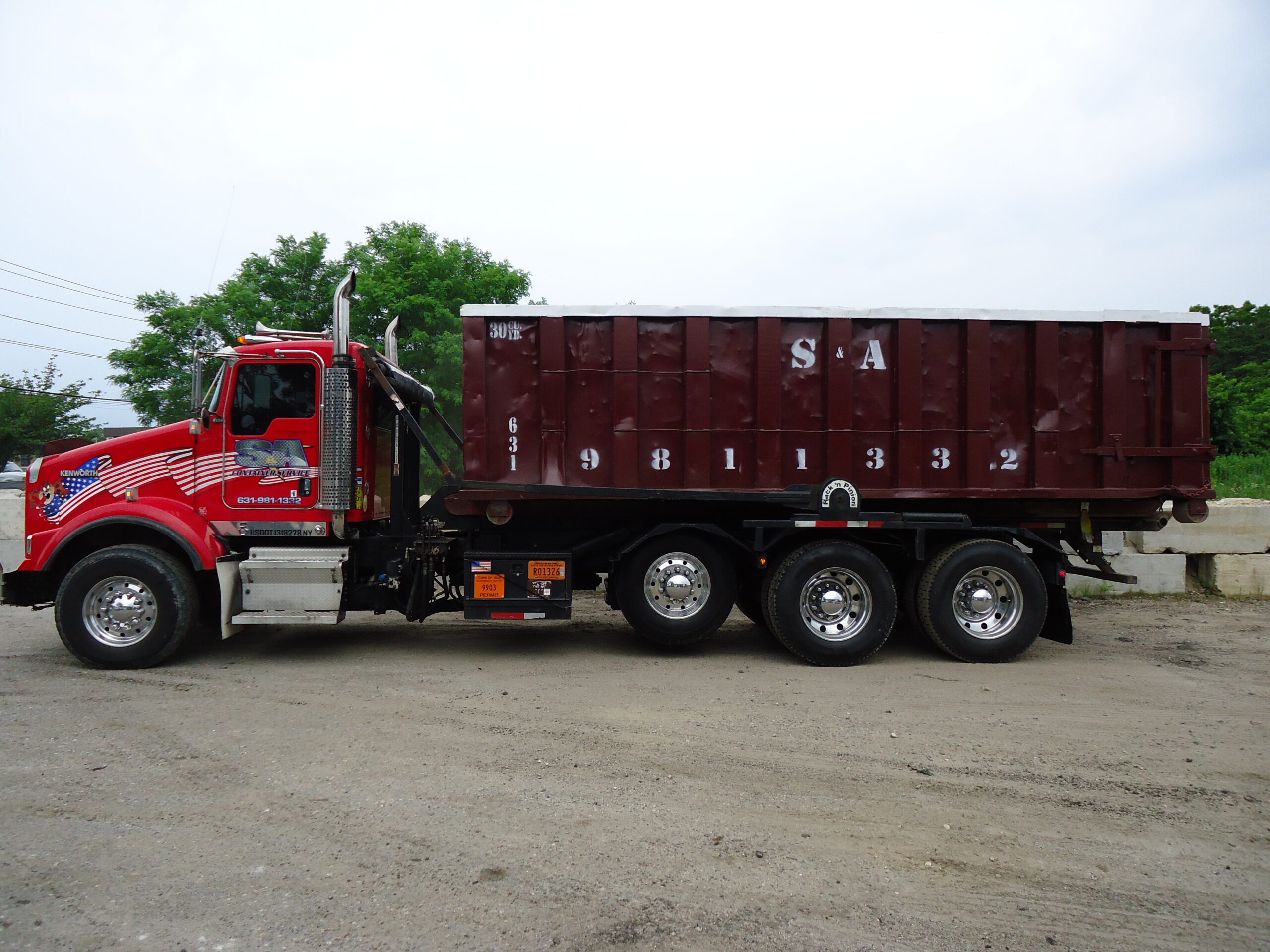

S&A Container Service 30YD Dumpster On Truck

Trusted Dumpster

Rental Company

Trusted Dumpster Rental company

Choosing the Right Dumpster Size

Selecting the appropriate container prevents overage fees and operational delays.


Size

Best For

Equivalent Capacity

6 Yard

Small cleanouts, tight spaces

~2–3 pickup loads

10 Yard

Heavy debris or minor remodels

~4 pickup loads

15 Yard

Small renovations

~6 pickup loads

20 Yard

Medium home projects

~8 pickup loads

30 Yard

Major cleanouts or additions

~12 pickup loads

40 Yard

Large construction or commercial work

~16+ pickup loads

Ready To Schedule Your Dumpster?

Our team helps our local homeowners and contractors navigate sizing, permits, and logistics every day. A quick consultation helps confirm requirements and scheduling before delivery.

dumpster rental mastic ny

Guidelines & Planning

Understanding Requirements

Residential vs Contractor Dumpster Rentals

Residential and commercial projects operate differently. Homeowners typically prioritize convenient placement and straightforward scheduling, while contractors focus on workflow efficiency, debris management, and consistent turnaround.


Commercial and recurring service needs are covered in our Commercial Dumpster Guide.

Positive Feedback

Delivery and Safety Considerations

Safe placement ensures efficient delivery and pickup. Confirm overhead clearance, a flat surface, and protected pavement before scheduling. Proper preparation reduces the risk of property damage and scheduling delays.


For preparation steps and safety best practices, see our Delivery Preparation Guide.

Prohibited Items and Responsible Disposal

Certain regulated materials cannot be placed in standard rental containers, including:

  • Hazardous chemicals and solvents
  • Electronics and lithium batteries
  • Tires and automotive batteries
  • Appliances containing refrigerants
  • Medical or biohazard waste
  • Friable Asbestos waste

Many municipalities host designated hazardous waste disposal events throughout the year. For a full list and disposal resources, see our Prohibited Items Guide.

Identify the Required Dumpster

Pricing Fundamentals on The Island

Dumpster pricing is influenced by container size, included weight allowances, debris type, and disposal location. Heavy materials such as concrete, dirt, and roofing shingles may reach transportation limits quickly.


Understanding how tonnage is calculated helps avoid unexpected charges. Regional disposal infrastructure and transport distance also influence pricing structure. Working with a local provider helps avoid unnecessary transportation costs and disposal surcharges.


For more detail, see our Weight & Tonnage Guide.

FAQ: Dumpster Rentals on The Island

Permits are usually required when a dumpster is placed on a public street. Requirements vary by town, so confirming local rules ahead of time prevents delays.

Rental periods vary by provider and project needs. Most residential projects fall within standard rental windows, with extensions available if necessary.

Overfilled or overweight containers may delay pickup and create safety issues. Staying within limits ensures legal and safe transport.

Yes, but street placement often requires municipal approval.

Hazardous materials, electronics, and certain regulated waste must be disposed of separately.