SA Container Site Logo Black

Need help? Talk to an Expert

631-648-9088

Dumpster Permits & Placement Guide


30YD_3D_Image_S_A_Container_Service-removebg-preview

Commercial Dumpster Rental Guide

The Ultimate Guide to S&A Commercial Waste Logistics & Site Management

S&A Container Service

Quick Answer Summary

Managing waste for commercial properties, corporate cleanouts, retail build-outs, and ongoing construction projects requires a higher level of operational planning than a standard residential rental. S&A Container Service provides heavy-duty commercial roll-off services structured around tight corporate timelines, strict property management guidelines, and demanding safety standards across our business corridors.


Commercial operations face unique site constraints. Unlike residential driveways, commercial sites often involve high-traffic loading docks, underground utility networks, tight retail alleyways, and active fire lanes. 


A primary cause of delivery failure on commercial properties is poor site coordination. If our driver arrives and finds the drop area blocked by delivery vehicles, employee parking, or un-cleared inventory pallets, your project faces immediate delays. Miscalculating overhead clearance around industrial overhangs, warehouse doors, and commercial light poles can similarly stop a delivery in its tracks.

A brief alignment conversation with our commercial dispatch desk prior to delivery helps clear up route hazards, placement legalities, and weight boundaries. We can review your commercial site plan, verify truck access paths, and set up a predictable swap schedule before our equipment leaves the yard. Explore The Ultimate Dumpster Guide to review our corporate accounts framework.

Planning for a Successful Commercial Dumpster Delivery

Successful commercial dumpster deliveries begin long before the truck arrives. While every project is different, the most efficient jobs have one thing in common: clear communication between the contractor, property manager, and our dispatch team before delivery day.


On active commercial construction sites, conditions can change quickly. Access roads may be excavated, loading dock areas may be reconfigured, or staging areas that were accessible a few days earlier may become blocked by equipment, construction materials, or demolition debris.


We’ve experienced projects where the planned dumpster location became inaccessible because the entrance had been excavated after the delivery was scheduled. Without advance notice, our driver had to safely place the container in the best available location. Once the project manager returned to the site, the container needed to be relocated, creating unnecessary delays that could have been avoided with a quick phone call before delivery.


On another commercial project, debris and equipment blocked the designated placement area when our truck arrived. Although the container was delivered successfully, it had to be positioned approximately 20 feet from its intended location, temporarily impacting active loading dock operations until the site could be cleared.


These situations are common on fast-moving commercial job sites and highlight why communication is just as important as scheduling. If site conditions change after your dumpster has been ordered, notifying our dispatch team before the truck leaves our yard allows us to adjust the delivery plan, coordinate with your project manager, and avoid unnecessary delays or additional moves.


A brief planning call before delivery can save valuable time, reduce disruption to your project, and help ensure the container is positioned exactly where your crew needs it the first time.

dumpster
SA Container

Local Commercial Logistics

Our region’s business infrastructure features distinct architectural layouts, from historic brick downtown villages to sprawling industrial parks. Before your commercial container arrives, check that your site meets these logistical rules:


  • Active Loading Zones: If placing a container near a warehouse loading bay or a retail service entrance, verify that the truck’s arrival won’t interrupt daily deliveries, business operations, or incoming inventory.
  • Turning Radius & Swing Space: Commercial properties often feature tight corners, security gates, and perimeter fencing. Our large trucks require ample “swing room” to maneuver around concrete median islands and light stanchions.
  • Weight-Bearing Substructures: Many commercial parking complexes and shopping centers feature underground drainage basins, utility vaults, or subterranean parking decks. Roll-off equipment must never be placed over these weak points.


What We Look For at Commercial Sites

To establish a seamless delivery or multi-container swap sequence, our commercial operations team analyzes several specific variables before drop-off:


  • Property Management Boundaries: We review landlord restrictions, shared-strip-mall agreements, and specific corporate park rules regarding container visibility and operational hours.
  • High-Volume Fleet Traffic: We track peak delivery hours for your business neighbors to time our truck arrivals when parking lots and back alleys are least congested.
  • Asphalt and Sub-base Resilience: Heavy commercial containers filled with roofing, masonry, or office cleanout furniture put immense stress on parking surfaces. We evaluate the condition of the pavement to prevent surface failures.
  • Debris Classification: Commercial waste often involves mixed materials. To keep your job site compliant with local disposal regulations, check out our Dumpster Weight & Tonnage Guide.
dumpster rental

Trusted Dumpster

Rental Company

Trusted Dumpster Rental company

Choosing Your Service Type: Front-Load vs. Roll-Off

Understanding the difference between commercial waste disposal systems helps determine whether your property requires an ongoing waste contract or a temporary project-based solution.

These are the smaller, static commercial dumpsters (typically 2 to 8 cubic yards) fitted with heavy plastic lids. They remain permanently on-site within a brick or wooden enclosure and are serviced on a recurring weekly or bi-weekly schedule. They are designed for everyday business garbage, food waste, and light packaging.

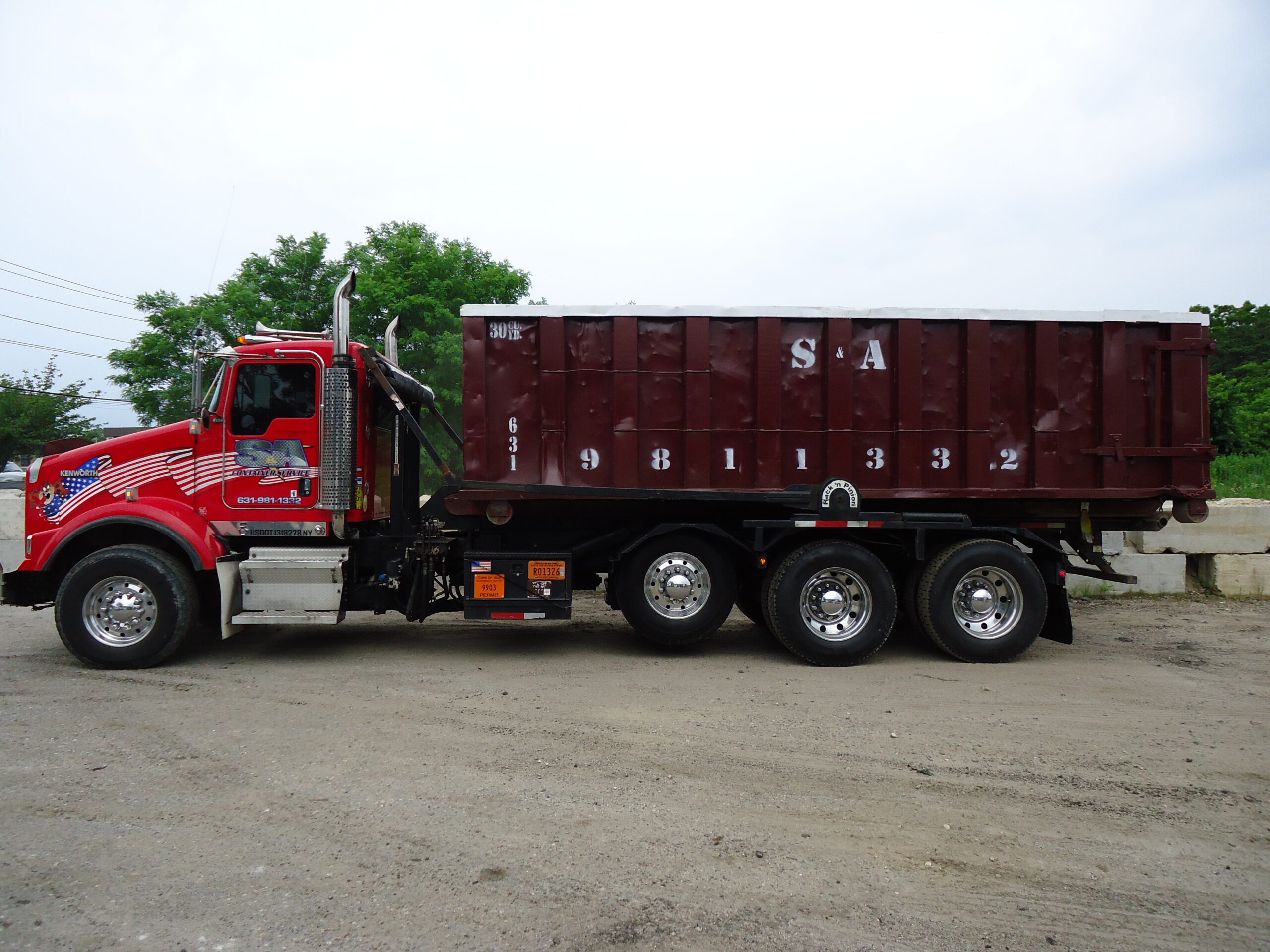
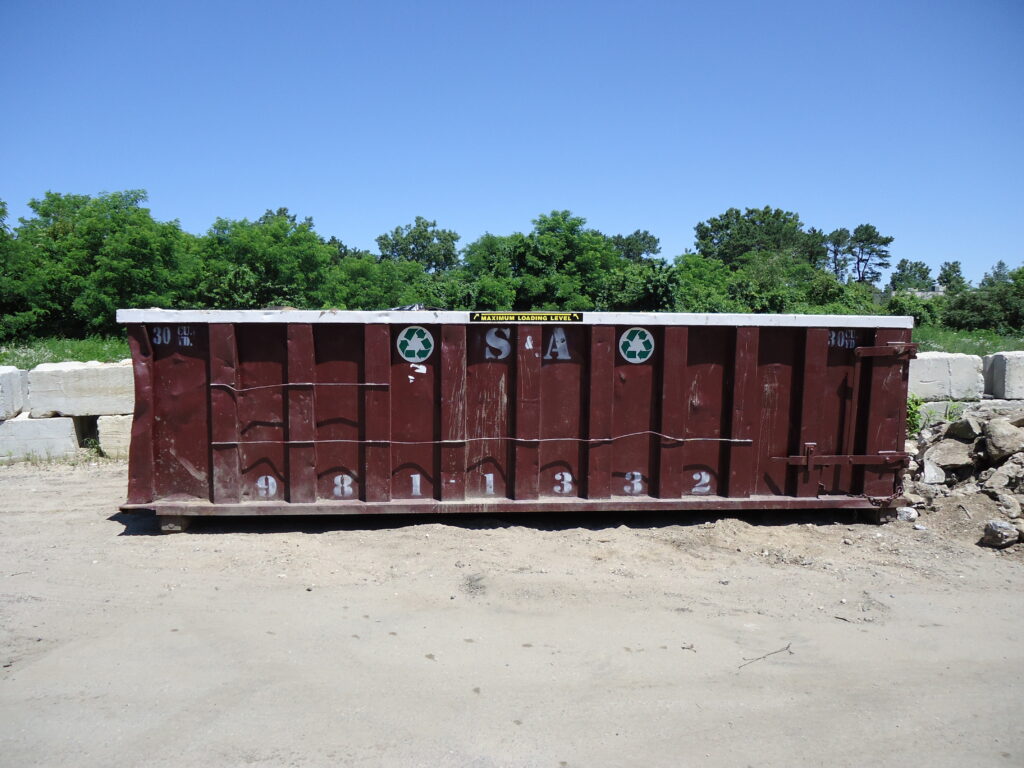
These are large, open-top industrial containers (ranging from 10 to 40 cubic yards) delivered by a heavy hoist truck. They are utilized for bulk materials, large-scale cleanouts, construction debris, or high-volume commercial operations where the entire container is hauled away and replaced once filled.

Live Load Dumpster Service for Sites with Limited Space

Not every commercial project has enough room to safely place a dumpster on-site. Busy loading docks, active distribution centers, downtown storefronts, occupied parking lots, and secure industrial facilities often cannot dedicate valuable space to a roll-off container for several days.


In these situations, S&A Container Service offers Live Load Dumpster Service.


With a live load, our truck remains on-site while your crew loads debris directly into the dumpster. Once the container is full, our driver immediately removes it from the property, eliminating the need to leave a dumpster on-site after the work is complete.


Because the truck remains at your location throughout the loading process, preparation is essential. Your labor crew, equipment, and materials should all be organized and ready before the truck arrives. Delays during loading reduce efficiency and may impact scheduling for other customers.

Live loads are an excellent solution for projects where space is limited, property management will not allow a dumpster to remain on-site, or operations cannot afford to block loading docks, customer parking, or traffic lanes for an extended period. Our dispatch team can help determine whether a traditional roll-off rental or a live load service is the best fit for your project.

Commercial Scenarios & Property Applications

Commercial waste management generally falls into distinct operational profiles, each presenting unique challenges.

  • Corporate Office Relocations: Office cleanouts produce a massive volume of desks, cubicle partitions, filing cabinets, electronics, and old carpet scraps over a tight window. We coordinate rapid-succession container swaps to match your tenant move-out deadline.
  • Warehouse Overhauls: Industrial warehouses regularly accumulate broken pallets, damaged inventory, bulk packaging materials, and obsolete machinery. Our large-scale roll-off containers provide the high-volume capacity needed to clear floor space quickly.
  • Alleyway & Strip Mall Dynamics: Shopping centers and busy retail plazas usually require placement in rear service corridors. Containers must sit flush against the building structure to keep fire lanes completely open for emergency vehicles.
  • Restaurant Waste Control: Food service operations generate heavy, organic waste that must be managed tightly to control odors and pests. For high-volume establishments, we evaluate whether a standard front-load schedule or a specialized compactor is required.
  • Multi-Family & Commercial Portfolios: Property managers rely on temporary roll-offs for tenant turnovers, roofing replacements, and seasonal landscape cleanups, alongside their permanent front-load infrastructure.
  • Active Job-Site Contractors: General contractors managing retail build-outs or structural renovations require dependable, on-call roll-off servicing to prevent debris from stalling their active workforce.

One of the biggest mistakes contractors make is waiting until a dumpster is completely overflowing before scheduling a swap. During busy construction seasons, planning ahead helps prevent crews from stopping work while waiting for debris removal. If you anticipate filling a container quickly, let our dispatch team know in advance so we can coordinate service around your project schedule whenever possible.

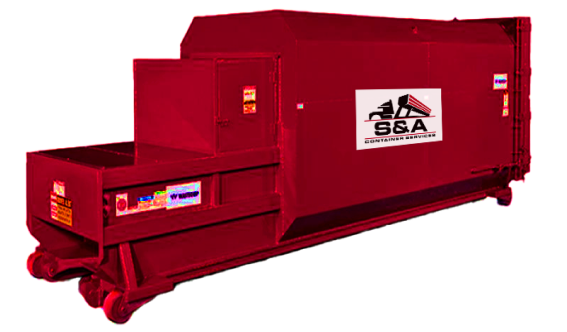
Compactor rentals

Specialized Equipment: Commercial Compactors

For industrial spaces, large shopping centers, and major corporate hubs with a constant stream of waste, standard containers fill up too quickly.

  • How They Work: Commercial compactors are sealed, heavy-duty mechanical units that crush waste directly into an attached roll-off container.
  • The Benefits: By compressing cardboard, paper, and general corporate trash, compactors increase your volume capacity by up to 4 to 1, drastically reducing the frequency of truck visits, saving valuable parking lot space, and lowering long-term hauling fees.

Reducing Disposal Costs Through Proper Waste Separation

For larger commercial projects and job sites, tossing all debris into a single “mixed trash” container is the most expensive way to handle waste. Implementing source-separation strategies on your property can yield significant financial savings:

Clean Masonry & Concrete Segregation

If your project involves breaking up a sidewalk, floor slab, or brick wall, rent a dedicated container solely for clean concrete, stone, or asphalt. Because these materials can be crushed and recycled locally, disposal costs are significantly lower than mixed commercial trash rates.

Scrap Metal Recovery

Cardboard, structural steel, iron rebar, and copper piping should be separated from general site trash. Dedicated metal recycling drop-offs eliminate heavy weight from your main container billing.

Clean Wood & Pallet Streams

Separating untreated dimensional lumber and shipping pallets into their own roll-off keeps them out of expensive solid-waste tipping streams, lowering your overall project tonnage profile.

Do You Need a Permit? (Commercial Criteria)

Commercial properties have different legal parameters than residential zones when it comes to municipal oversight.


Private Commercial Lots (No Permit Needed)

  • Privately Owned Parking Fields: If your container sits entirely within a privately owned corporate parking lot, shopping center plaza, or industrial park yard, no municipal street permit is required.
  • Industrial Zones: Operations within heavy industrial zones or designated business parks rarely require local town placement filings, provided the container stays off public access roads.

Municipal & Downtown Corridors (Permit Required)

  • Main Street Storefronts: If your retail space lacks a rear loading area and the dumpster must sit on a public village street, parking meter space, or pedestrian right-of-way, a Highway Occupancy Permit is mandatory.
  • Pedestrian Protection Codes: Placements in high-traffic commercial zones often require the business or general contractor to install temporary covered walkways or safety barriers to keep public sidewalks clear and secure.
  • Processing Timelines: Local town clerks generally require 48 to 72 hours to process public commercial street filings. S&A Container Service cannot drop equipment on public tarmac until this documentation is officially signed and verified.
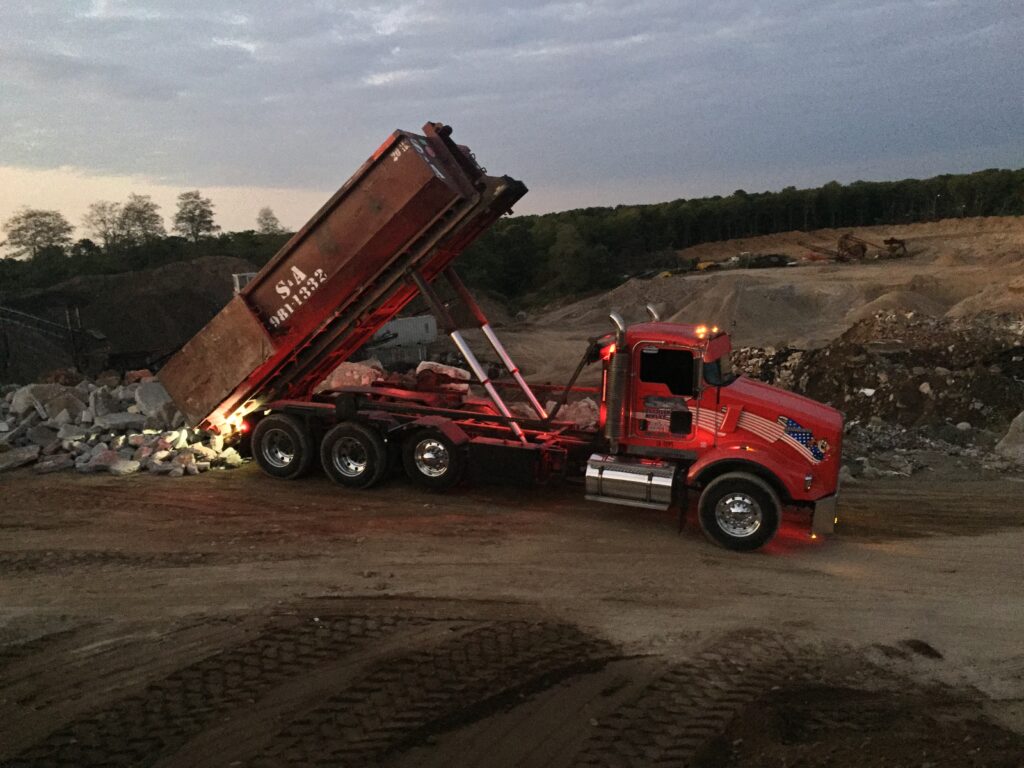
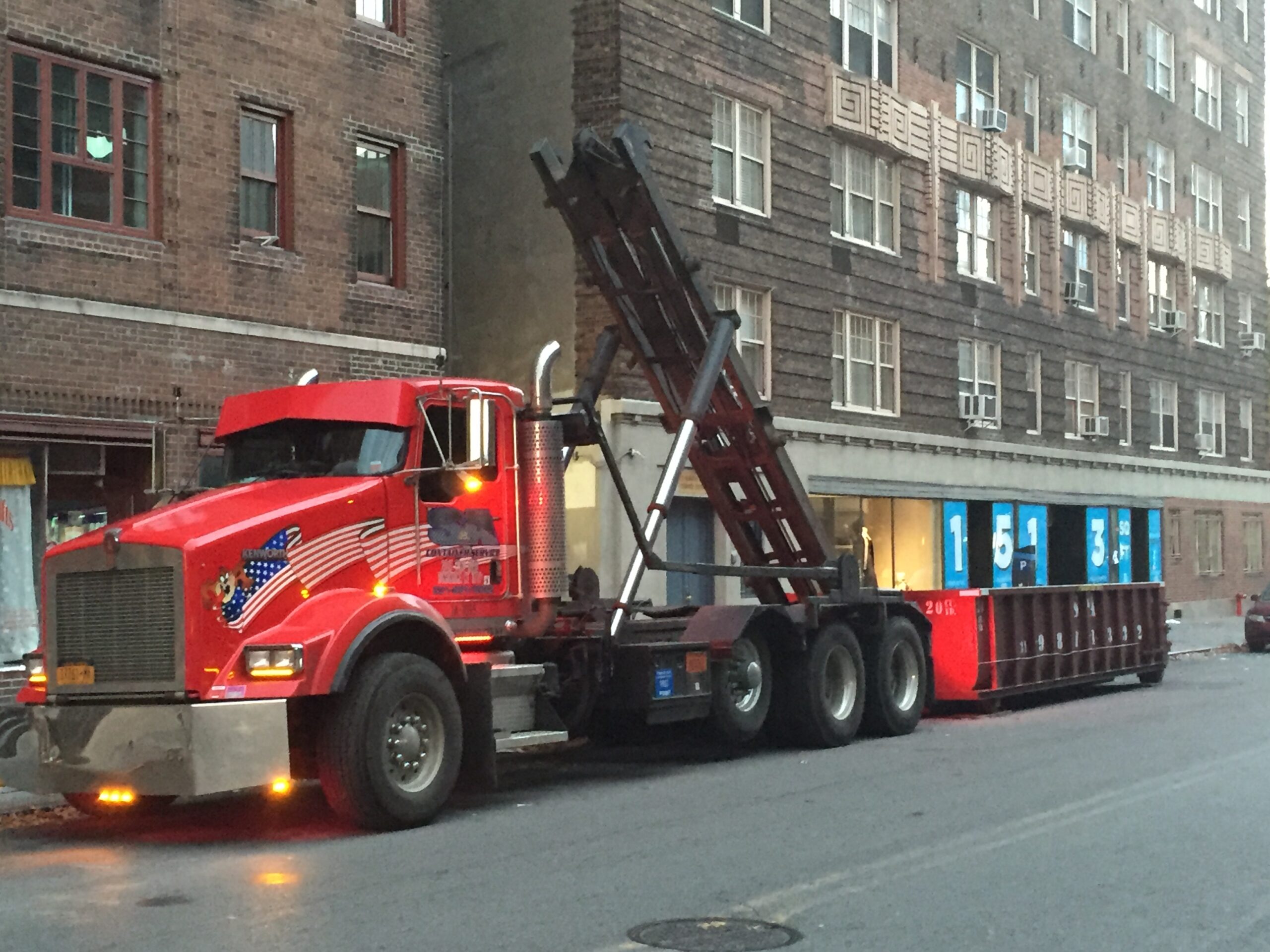
S&A Container Service 30YD Dumpster On Truck

Commercial Spacing: By the Numbers

Commercial roll-off trucks are significantly larger and heavier than residential delivery vehicles. Your job site must strictly maintain these dimensional minimums:


  • Straight-Line Approach: We require a minimum of 60 to 70 feet of direct, linear approach space to back the truck into position and pull forward out from under the rails safely.
  • Vertical Lift Clearances: While traveling, the truck needs 22 feet of clearance, but during the hydraulic dump phase, the boom slants upward to a height of 30 to 32 feet. Look up to verify that overhead industrial wires, tree canopies, or building overhangs are out of range.
  • Total Operating Width: A continuous width of 10 to 12 feet is mandatory. Employee parking spaces next to the container zone must be coned off or restricted on delivery morning to avoid vehicular damage.

Surface Protection for Commercial Asphalt & Pavers

The structural integrity of a commercial parking lot can easily be compromised by a fully loaded roll-off container. Protecting the property owner’s asset is a critical operational step:

  • Heavy Industrial Planking: For commercial loads exceeding 5 tons, we require a double-layer planking method using heavy wood timbers or commercial-grade plywood beneath the container’s steel rear rollers.
  • Concrete vs. Asphalt Placement: Whenever possible, choose a concrete pad (such as a dumpster enclosure or loading apron) over asphalt. Concrete handles the intense focal pressure of steel wheels far better than asphalt, particularly during high-temperature summer months.
  • Soft Ground Warning: Commercial properties under active development often feature unpaved gravel or dirt staging zones. If a container is placed on uncompacted earth, heavy rains can cause the unit to sink, making extraction difficult and risking damage to the truck’s hydraulic lift lines.

Safety Protocols for High-Traffic Commercial Zones

If your business project requires placing a roll-off container near active consumer pedestrian paths or vehicle lanes, implement these safety measures immediately:


  • High-Visibility Barricading: Utilize bright reflective safety cones, caution tape, or temporary chain-link fencing around the container to deter customers or unauthorized personnel from entering the work zone.
  • Enclosure Compliance: If your local village code mandates that commercial refuse containers be hidden from public view, verify that your rental fits completely inside your property’s brick or wooden masonry dumpster enclosures.
  • Storm Drain Awareness: Position your container away from primary parking lot storm basins. Debris runoff from open construction containers must not block or contaminate local waterways during heavy downpours.
dumpster rental

FAQ: Commercial Accounts & Fleet Management

Yes. We specialize in corporate fleet logistics for commercial contractors and multi-property managers. We can tie multiple ongoing projects across different municipalities to a single corporate account with itemized billing, unique site-level tonnage tracking, and designated points of contact.

For structural teardowns, large commercial cleanouts, or major flat-roof replacements, we generally recommend our 30-yard or 40-yard containers. These units handle high-volume, bulky items efficiently, reducing the total number of swap trips required to keep your crew working.

While it is physically possible, it is financially inefficient. Mixing heavy concrete with general office trash flags the entire container as mixed solid waste, meaning you pay top-tier tonnage rates for materials that could have been disposed of at a much lower cost if separated into a dedicated masonry container.

Contact Our Commercial Dispatch Team For Project Planning

Whether it’s a corporate cleanout or a multi-tenant development, don’t leave logistics to chance. Partner with our S&A Container Service today and get a quote from our team! Our team delivers the dependable, on-time dumpster drops and swaps that keep your job site moving safely. Let us handle the heavy hauling so you can focus on hitting your milestones.