 sales@sacontainer.com
 631 648 9088

How Dumpster Weight Is Measured
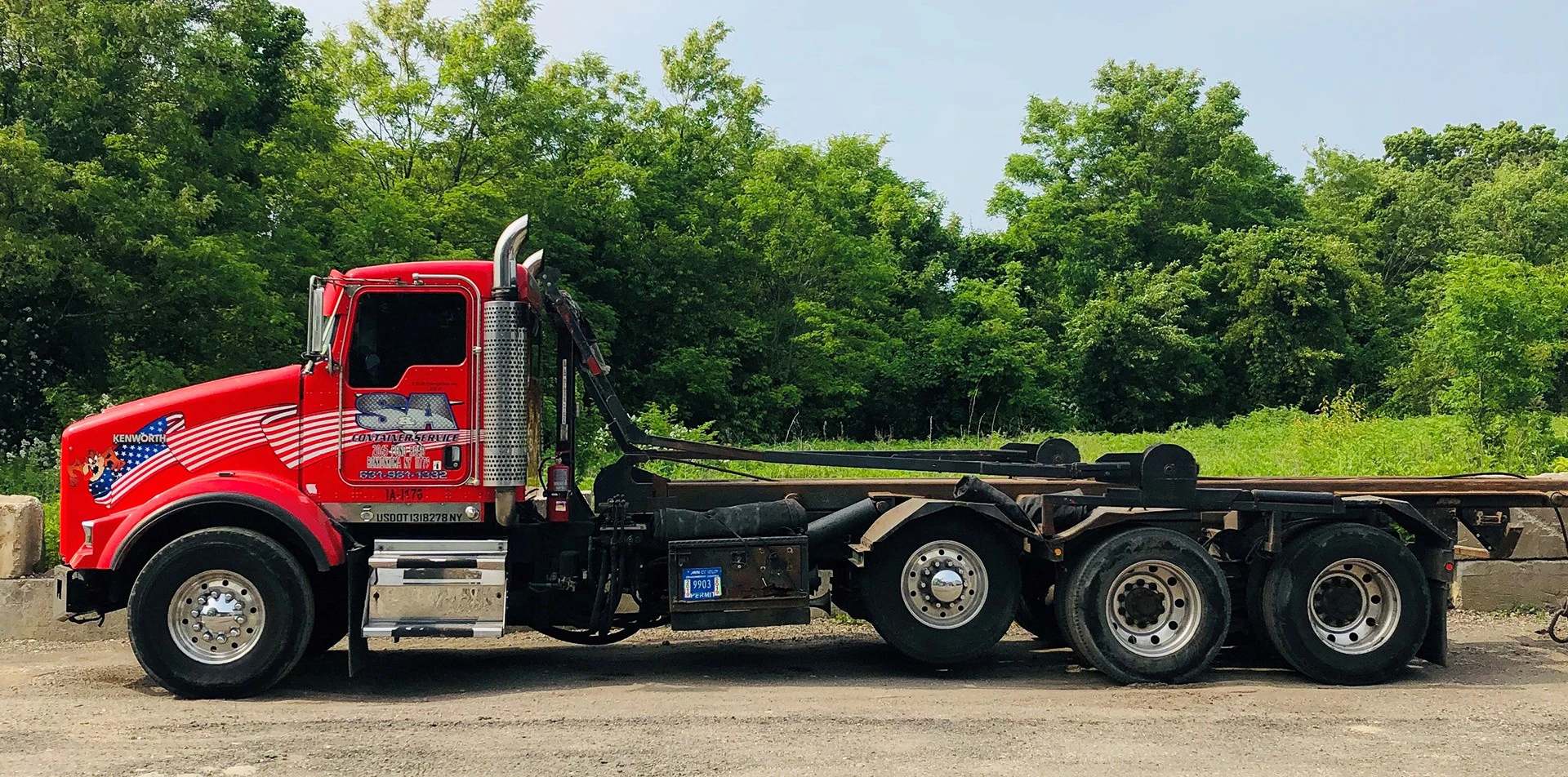
When a dumpster is picked up, the truck transports the debris to a certified scale facility.
The weighing process:
- Truck + full container are weighed (gross weight)
- Truck returns empty and is weighed again (tare weight)
- Net weight = gross weight − tare weight
This net weight represents the total tonnage of debris. Disposal facilities use certified scales to deliver accurate measurement. Certified truck scales are regulated by state and county authorities to ensure accurate commercial weight measurement for waste transport and disposal billing.
Most dumpster rentals include a set weight allowance as part of the base price. For example, a container may include 2 tons of disposal weight, with additional debris charged at a per-ton overage rate if that limit is exceeded.
Overage fees are typically calculated based on the additional weight beyond the included allowance and billed at the current per-ton disposal rate. For instance, if a project exceeds the included weight allowance by 0.5 tons, the overage would be prorated accordingly.
Because disposal facilities charge by tonnage, this system ensures that customers only pay for the actual amount of debris being removed. Understanding weight allowances before scheduling a dumpster helps prevent unexpected charges and allows projects to be planned more accurately.
A scale ticket documents the exact weight of the debris and serves as verification for disposal charges.
Typical information includes:
- Date & time
- Facility name
- Gross weight
- Tare weight
- Net weight (tons)
- Material classification
Scale tickets provide transparency and accuracy for billing.