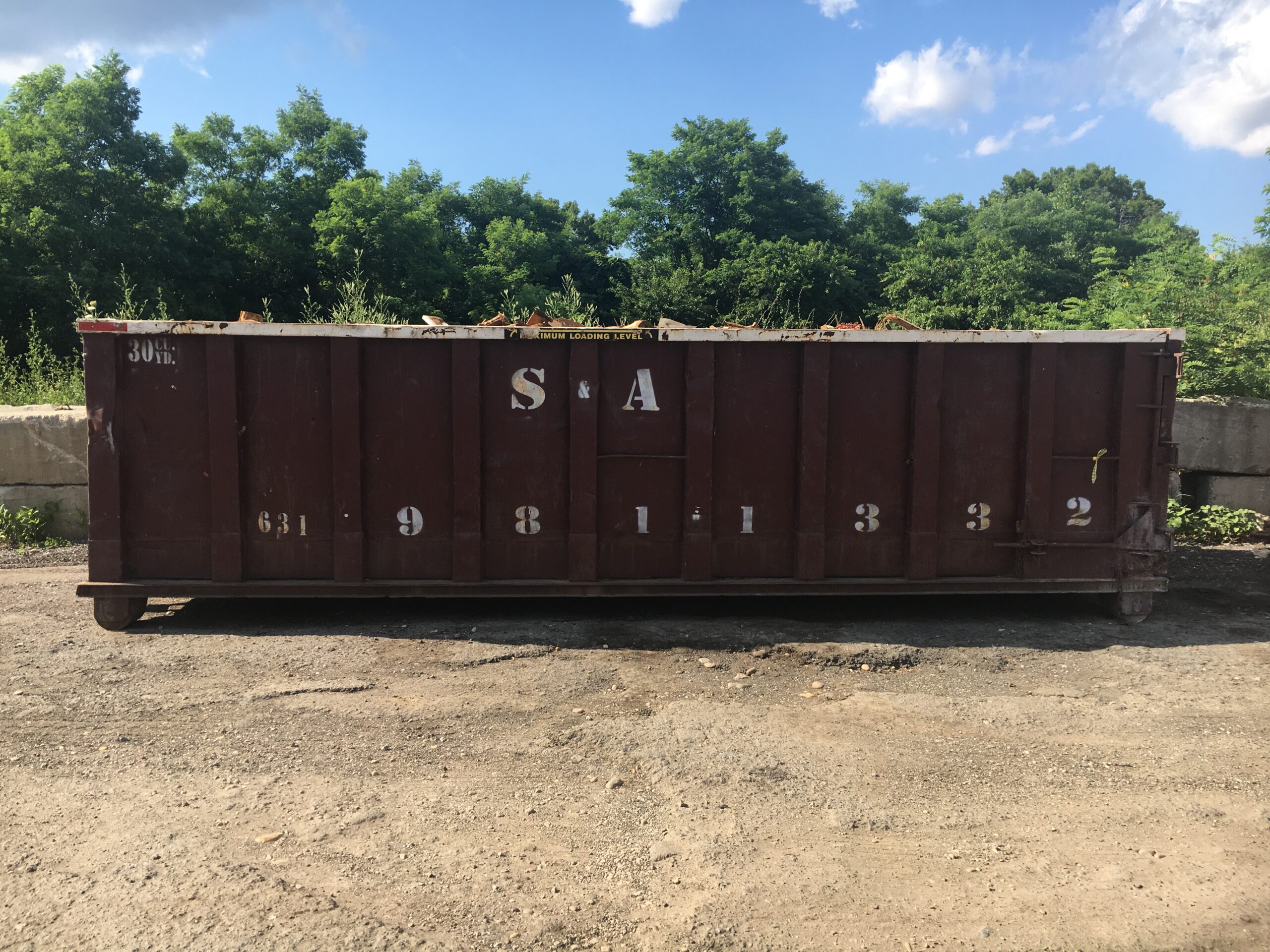
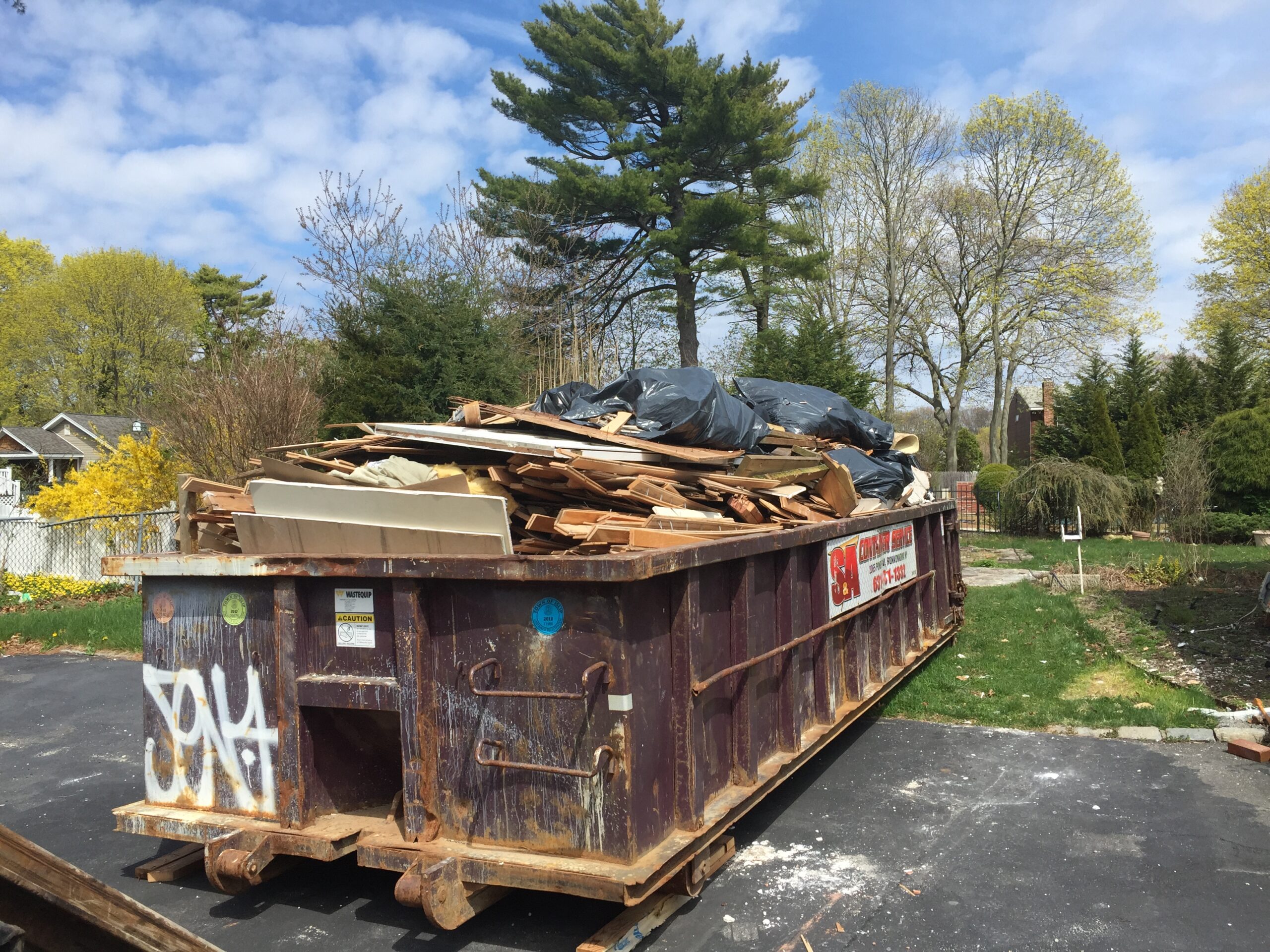
If you are doing a renovation, be careful with “mixed” vs “clean” loads. Mixing the following can drastically change your pricing:
- Clean Fill: Dirt only
- Clean Masonry: Concrete only
- The Rule: If you fill a 20-yard dumpster with “clean” concrete, it’s recyclable. If you toss even one bag of household trash or wood on top, it becomes a “Mixed Load,” and you will be charged the higher tonnage rate.
Even a small amount of the wrong material inside a recycling-only dumpster can cause problems at the recycling facility.
First, recycling facilities are often not permitted by local or state DEC regulations to accept certain mixed materials. What may seem like a small amount in one dumpster can quickly add up to hundreds of cubic yards across multiple loads.
Second, contaminated loads require additional labor to manually separate materials from the recycling stream, and the facility then takes on the additional disposal costs of removing and transporting those non-recyclable items.
During renovations and demolition projects, it’s very common for materials to become mixed together as crews work quickly throughout the job. Separating heavy debris such as concrete, brick, dirt, asphalt, and metal from general construction waste can significantly reduce disposal costs and help avoid overweight charges.
For larger commercial cleanouts, warehouse tear-outs, or demolition projects, having a dedicated scrap metal dumpster on-site can be an especially cost-effective solution. Removing heavy metal debris from standard construction dumpsters lowers overall tonnage weight, and in many cases, metal-only containers are charged primarily by the haul fee rather than disposal weight.
Local Warning: In our coastal areas, beware of “Wet Debris.” If your debris is soaked from a storm or flood, it weighs significantly more, which can lead to unexpected overage charges at the scale.

 sales@sacontainer.com
 631 648 9088